






 Map view
 Use current location



Plan ahead and save 25%*
For a limited time, first-time purchasers can receive 25% off new cemetery property* at participating locations. Explore options for yourself or your family and find a lasting place to honor what matters most.
Start planningNeed assistance? We're always here for you.
844-808-3310
Memorial Planning | Educational resource
When people think about cremation, they sometimes picture a very simple process: cremation takes place, the ashes are returned to the family, and there is no funeral or gathering.
That can be one way to proceed, but it is far from the only option.
Choosing cremation does not mean giving up the opportunity to gather, remember your loved one, or hold a meaningful ceremony. In fact, cremation can give families considerable flexibility in deciding how, when, and where they want to honor someone’s life.
That distinction is increasingly important as cremation becomes more common. The National Funeral Directors Association projected that the U.S. cremation rate would reach 63.4% in 2025, compared with a burial rate of 31.6%. [1]
Understanding your cremation options can make it easier to choose arrangements that reflect your loved one, your family, and the traditions that matter to you.
One of the simplest ways to understand cremation is to separate two decisions that are often mistakenly treated as one.
The first decision families make is what happens to the body after death (cremation, casketing, cosmetics, etc.).
The second decision is about how the person’s life is remembered and honored. That decision can include a funeral service, memorial service, visitation, celebration of life, cemetery ceremony, or another gathering that is meaningful to the family.
Those choices can work together in many different ways. For example, a family may choose to gather for a funeral service before cremation. Another family may have the cremation take place first and hold a memorial service several weeks later. Others may choose a small gathering at a cemetery when an urn is placed in its permanent resting place.
No two ceremonies will match because every life is one-of-a-kind. Memorial Planning teams work with each family to arrange services that feel personal to their situation. To learn more about funeral options, explore the Funerals section of the Memorial Planning blog. [2]

Yes. Families may choose to hold a traditional funeral service before cremation. A visitation or viewing may also be possible depending on the arrangements selected.
In this type of arrangement, family and friends have an opportunity to gather while the body is present. Cremation occurs afterward.
This can be particularly meaningful for families who value the traditions associated with a funeral service and a final opportunity to say goodbye to their person, but prefer cremation as the final disposition.
While the body of the departed is present for a funeral, a memorial service takes place without the body present and may include an urn.
Because cremation does not require a memorial service to occur immediately, families may have more time to decide what they want the gathering to look like. That flexibility can be practical: Relatives may need time to travel, or a venue may only be available on a later date. Families may simply want more time to plan without feeling rushed.
A memorial service might include music, photographs, readings, prayers, a eulogy, or stories shared by family and friends. It may be religious or secular, formal or informal. What matters is creating a gathering that feels appropriate for the person being remembered.
Our guide to planning a memorial service after cremation explores timing, location, speakers, personal touches and other decisions families may want to consider. [3]
A celebration of life is another possibility. Compared with some traditional ceremonies, celebrations of life often give families considerable freedom in deciding what the gathering will include. A family might share favorite music, display photographs, serve a loved one’s favorite food, or invite guests to engage in unique activities the person would’ve enjoyed.
Despite its name, a celebration of life doesn’t have to be cheerful or casual. It can still make room for grief, reflection and remembrance.
Whichever ceremony you choose, each option gives loved ones an opportunity to honor the departed and support one another in grief.
The service itself is only one part of the decision. Families will also want to consider what will happen to their loved one’s ashes.
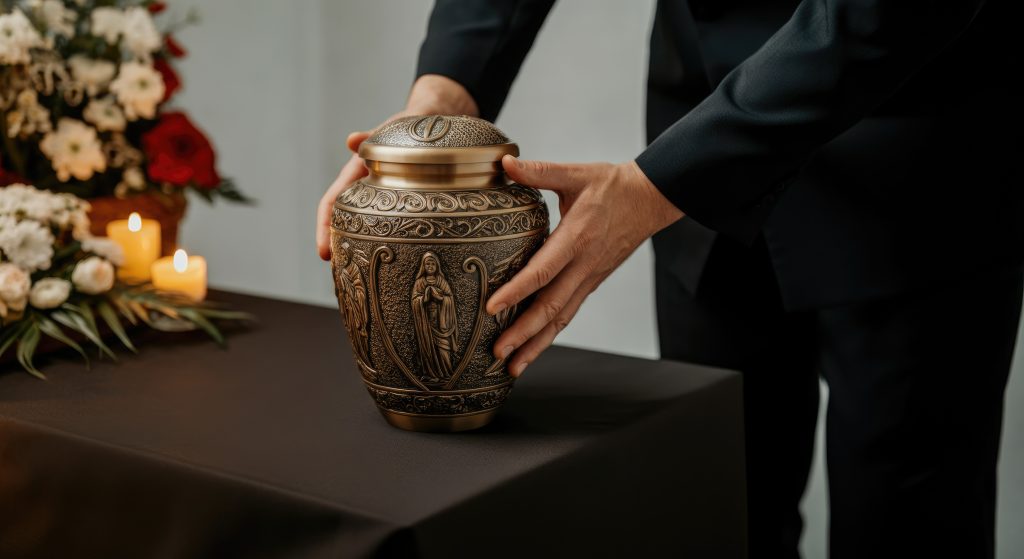
Some families keep an urn at home. Others choose a permanent place of remembrance at a cemetery. Options may include burial of an urn or placement in an individual niche. Depending on local laws, cemetery rules, and cultural traditions, scattering may also be an option.
There is no universal choice that works for every family. It can help, however, to think beyond the immediate arrangements and consider how people may want to remember and visit their loved one years from now.
Memorial Planning locations offer a variety of cremation memorialization choices. Learn more through Memorial Planning cremation services. [4]

When arrangements have to be made quickly, it can be easy to focus on what happens today rather than what family members may need years from now.
A permanent place of remembrance can provide somewhere family and friends know they can return to. It can also help preserve a person’s story for future generations.
For some families, that will be an individual cemetery space. For others, it may be a niche, family tribute, or another form of memorialization. For those who scatter ashes, some families save a portion to inter and visit later or establish a cenotaph (a memorial tribute where the body is/ashes are not present) to honor their loved one’s memory.
These are personal decisions. Understanding the choices before making them can help families select something intentionally rather than feeling that cremation has left them with few choices.
No. Cremation can be simple, but it can also be accompanied by many of the traditions and personal details associated with other funeral arrangements.
A family could choose cremation and still have a visitation, funeral service, religious ceremony, memorial service, celebration of life, or cemetery ceremony. Conversely, someone may specifically want very simple arrangements with few ceremonial elements. Both approaches can be appropriate.
The goal is to understand your options well enough to choose what has meaning for you and your family.
Yes. Planning ahead gives you time to explore the choices available, ask questions, and communicate your preferences to the team that may be responsible for carrying them out.
You don’t have to decide every detail. Even documenting a few important preferences – such as whether you prefer burial or cremation, what kind of service feels right, and where you would like your ashes placed – can give your family useful guidance. If your wishes change later, you can revisit the plan.
Memorial Planning’s cremation resources can help families explore cremation and memorialization choices, whether arrangements are needed now or are being considered in advance. [3]
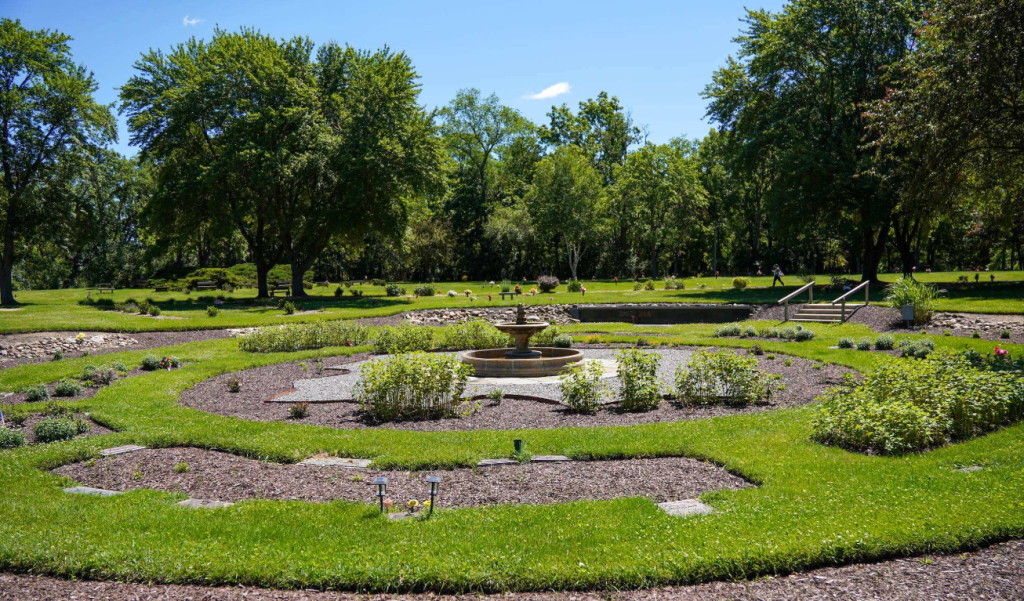
Cremation is the first step to honoring a life. Families can choose cremation and still gather, and follow religious or family traditions.
A heartfelt ceremony can be held before or after cremation. You can create a permanent place of remembrance, scatter ashes somewhere meaningful, or explore another option that reflects your family’s wishes.
What matters is understanding that you have options. When families know their options, they are better prepared to decide what kind of remembrance is meaningful to them.
If you are considering cremation for a loved one or thinking about your own advance arrangements, a Memorial Planning Family Service Counselor can help explain the options available in your area. Begin by exploring Memorial Planning cremation services. [3]
1. National Funeral Directors Association. 2025 Cremation & Burial Report.
2. Memorial Planning. Funerals.
3. Memorial Planning. Cremation Services.4. Memorial Planning. How to Plan a Memorial Service After Cremation: The Complete Memorial Planning Guide.
Image Sources: Vecteezy


